
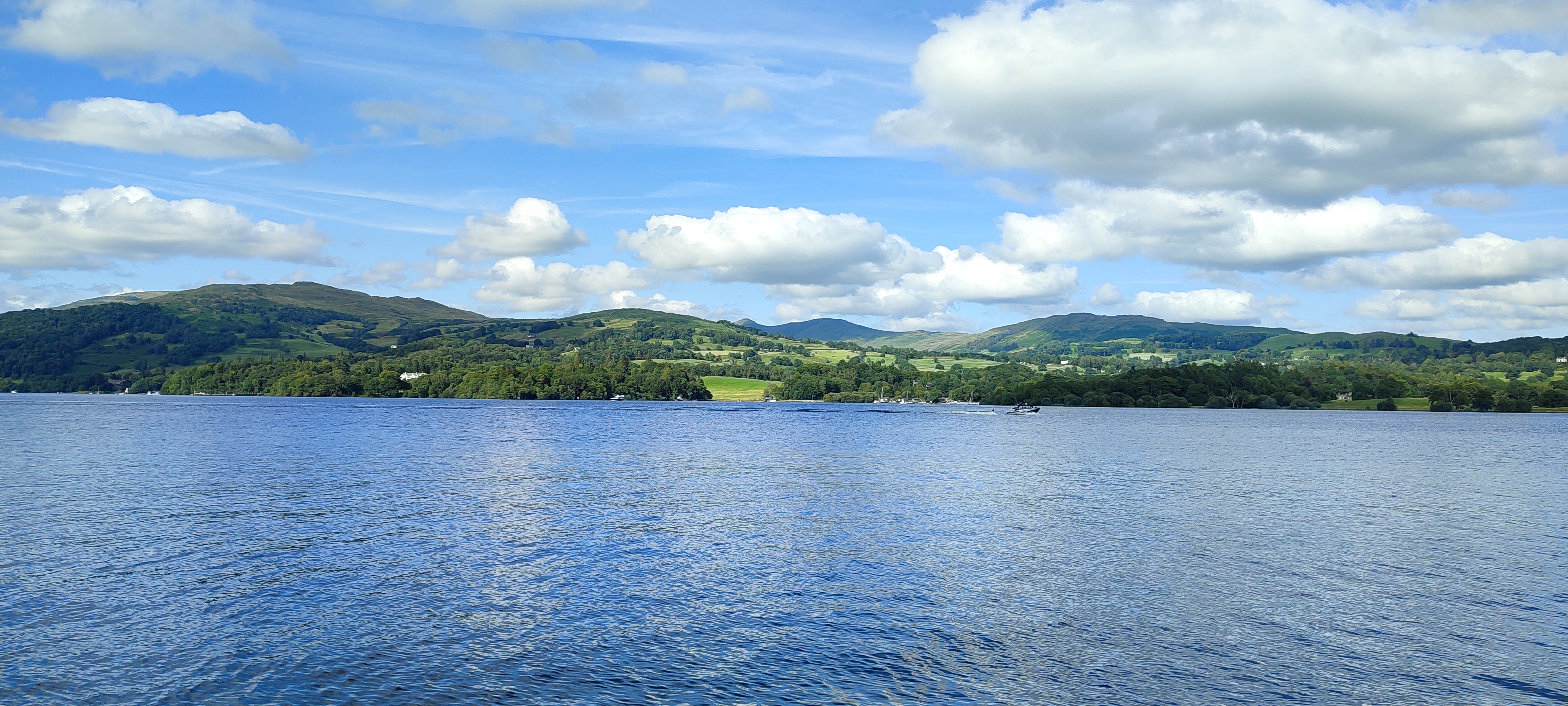
A new plan to take wastewater away from Windermere could cost as much as £3.7 billion. The proposals are the result of a major feasibility study looking at how to stop sewage discharges and highway runoff reaching England’s largest natural lake.
Published on 21 October 2026, the Only Rainwater into Windermere report says the ambition is technically possible. The catch is the scale: miles of underground pipes and tunnels, upgraded treatment facilities and years of construction would be needed.
For anyone who lives, works or spends time around Windermere, it is a significant announcement. But it is important to be clear about where things stand: this is a feasibility study, not an approved or funded construction scheme.
What has actually been proposed?
Instead of continuing to rely solely on upgrades to individual treatment works and sewers around the lake, the study explores collecting wastewater across the wider catchment and transferring it away from Windermere for treatment. It would cover public sewers and some properties currently using private drainage.
The proposals could include:
- Up to 138km of new sewerage network, including underground tunnels and pipes to move wastewater out of the catchment.
- First-time public sewerage connections for around 12,800 people who currently rely on private systems.
- Interception of 35km of highway runoff to help keep polluted road drainage out of the lake.
- 37 hectares of sustainable drainage to manage rainfall more naturally.
The study examined more than 70 possible engineering solutions before shortlisting two. Both would change how wastewater is collected and treated across the catchment, including areas around Ambleside, Grasmere, the Langdales and both sides of the lake.
River Leven or Ulverston: the two options explained
The biggest decision still to be made is where the collected wastewater would be treated and where the treated water would then be discharged. The study has taken forward two possibilities:
Option 1: River Leven
This option would move wastewater to an upgraded treatment facility associated with the River Leven route. Its indicative construction cost is £3.6 billion, with around 14km of tunnel and 35km of rising mains in addition to the shared catchment network.
Option 2: Ulverston
The second option would transfer wastewater farther towards an upgraded facility at Ulverston. Its estimated construction cost is £3.7 billion, with about 19km of tunnel and 42km of rising mains, alongside the shared network.
Neither route is final. The maps published with the report show illustrative routes, not settled alignments or a confirmed construction footprint. Further engineering, environmental assessments and engagement with affected communities would be required.
You can see the study’s illustrative maps and read the official report.
Would water bills increase?
Possibly. The study includes early estimates of how the cost might be recovered through water bills, but it does not announce an actual bill increase.
If the project were funded only by United Utilities customers, the report estimates an additional £3.17 a month for the River Leven option or £2.85 a month for the Ulverston option in 2035.
It also models a hypothetical national funding approach. If costs were shared across households in England, the estimated increase in 2035 would be around 35p a month for the Leven option or 31p for Ulverston. That would require a government decision; it is not current policy.
These figures are preliminary modelling in real terms at third-quarter 2025 prices. Final costs, the funding arrangement and any impact on bills would depend on decisions that have not yet been taken.
Why does Windermere need a different approach?
Windermere has faced years of concern about water quality, including sewage discharges, excess nutrients and the risk of algal blooms. As weather patterns change, heavier downpours can also put extra pressure on sewers and treatment works.
The coalition behind the study argues that repeatedly upgrading existing infrastructure may not be enough to deliver the longer-term change it wants to see. Removing wastewater inputs would tackle one of the lake’s major controllable sources of nutrients, although the wider work of protecting the lake would still need to address other pressures on the catchment.
That matters well beyond the shoreline. Windermere sits at the heart of the Lake District visitor economy, supporting boat operators, accommodation, shops, cafés and countless other local businesses. The study estimates around £7.5 billion in combined benefits over the life of the proposed infrastructure. This is a forecast of economic, environmental and social value, not cash already secured or guaranteed.
Would the work disrupt visits to the Lake District?
A project of this size would inevitably raise questions about roads, local businesses, public access and construction traffic. The feasibility report suggests extensive tunnelling to reduce disturbance on the surface, together with carefully phased work and consideration of peak visitor periods.
The report puts forward an indicative seven-year construction programme, but that should not be read as a start date or a promise that the work is about to begin. Detailed design, consultation, funding decisions, planning and regulatory approvals would all have to come first.
There is no new lake closure or visitor restriction announced as part of this feasibility study. Anyone planning to swim or take part in watersports should continue to check the latest official local advice and conditions rather than assuming the proposed scheme has already changed water quality.
Isn’t United Utilities already investing in Windermere?
Yes. This much larger proposal is separate from the £200 million programme already under way around Windermere. That existing work includes treatment improvements at sites such as Ambleside, Langdale, Grasmere and Troutbeck, alongside further planned projects.
The feasibility study looks much further ahead, exploring whether a redesigned catchment-wide system could provide a longer-term answer. One announcement does not mean the other work has been cancelled.
What happens next?
The next stage is detailed design. Engineers will need to test the two options, refine costs and routes, assess environmental effects and discuss the plans with communities and regulators. The coalition says the public will be involved before decisions are made.
Only after those steps, and the necessary funding and approvals, could a final scheme move towards construction. For now, the study shows what might be possible, rather than what has definitely been agreed.
Explore Windermere while the debate continues
Whatever the outcome, the lake remains one of Cumbria’s most important places. If you are planning a visit, explore our Lake Windermere guide, discover things to do in Bowness-on-Windermere or find out about cruises from Bowness Pier.
Official sources and further reading
- Only Rainwater into Windermere: project overview, maps and downloads
- Full feasibility report (PDF)
- United Utilities: progress on the separate £200m Windermere upgrade
Information checked 21 October 2026. This article will be updated as the proposals move through further design, public engagement and regulatory decisions.


No approved comments yet.