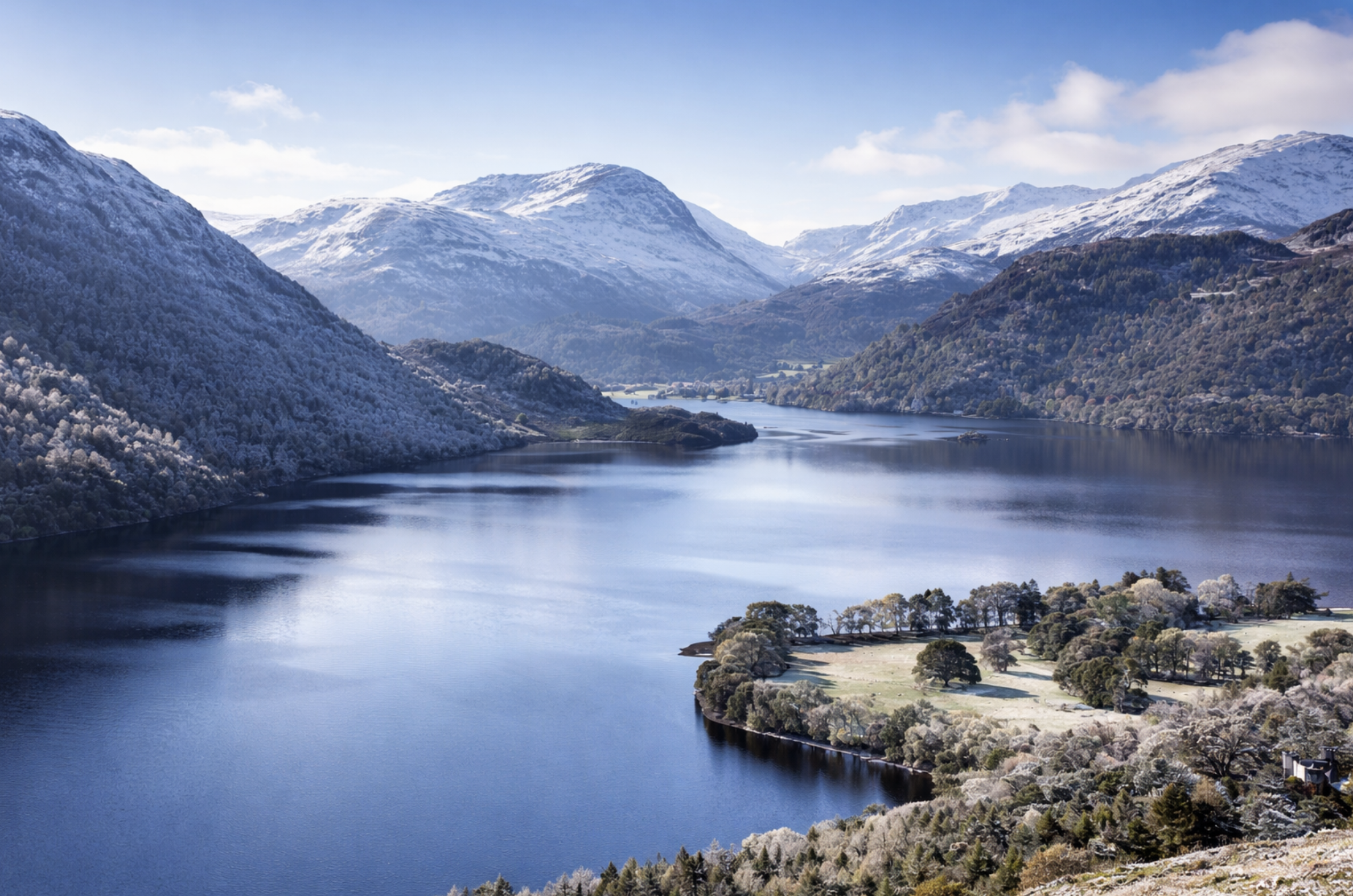
Set where the northern shores of Windermere meet the fells of Loughrigg and Wansfell, Ambleside has evolved from a strategic Roman outpost into one of the Lake District’s best-loved market towns. Its story threads together ancient routes, medieval markets, water-powered industry, Victorian tourism, literary fame, and today’s thriving outdoor culture.
Roman Ambleside: the fort at Waterhead
On the lakeshore at Waterhead lie the remains of a Roman fort, often identified as Galava. Built to guard key east–west and north–south routes through the central fells, the fort connected the coast and the Cumbrian interior, with roads leading toward Hardknott, Ravenglass, and the Eden Valley. Garrison life here supported movement of goods and troops, and its position by the lake made transport and supply more practical in a mountainous landscape.
From hamlet to market town
After Rome, small farming settlements clustered around fertile valleys and becks. By the medieval period Ambleside had grown into a modest market community, serving farms across Rydal, Loughrigg, and the head of Windermere. The town’s lanes still converge on the central square, echoing centuries of fairs, trade, and parish life.
Mills, waterpower and green slate
From the 17th century, Stock Ghyll powered a line of mills for corn-grinding and fulling cloth, part of a wider Lakeland tradition of small water-powered industry. Nearby, green slate quarries and stone yards supplied roofing and building stone across the region, shaping the look of Ambleside itself: rugged slate walls, neat coursing, and the soft sheen of weathered Lakeland stone.
Bridge House: Ambleside’s pocket-sized icon
Perhaps Ambleside’s most photographed building, Bridge House straddles Stock Ghyll on a single arch. Built in the 17th century, traditionally as a store for a local family mill, it later served as a tiny dwelling and shop. Today it stands as a perfectly scaled symbol of the town’s vernacular ingenuity and charm.
Victorian transformation: rail, steamers and visitors
The Victorian era changed everything. When the railway reached Windermere (the town) in the 1840s, Ambleside suddenly found itself just a steamer ride and short coach trip from the national rail network. Inns expanded, guesthouses multiplied, and boat services on Derwentwater’s southern cousin, Windermere, turned lake travel into sightseeing. Paths were improved, viewpoints popularised, and Ambleside gained a reputation as a welcoming base for touring the central Lakes.
Writers, thinkers and makers
Ambleside’s landscape drew artists and writers as strongly as its markets drew traders. William and Dorothy Wordsworth lived at nearby Rydal Mount, shaping the romantic image of the Lakes. Social reformer and writer Harriet Martineau made Ambleside her home, championing education and local wellbeing. In the late 19th century the Keswick School of Industrial Art influenced design across the north Lakes, while Ambleside’s own craftspeople worked in metal, wood, and stone. The town’s pencil connection, born from Borrowdale graphite, grew into a celebrated Cumbrian brand, reflected today in local museums and collections.
St Mary’s and the Victorian townscape
Ambleside’s skyline took on its present character in the 1800s, most prominently through St Mary’s Church, a handsome Victorian Gothic landmark associated with leading architects of the era. Slate terraces, shopfronts and hotels stitched the settlement together, while Rothay Park and riverside paths offered fresh-air promenades long before “outdoor lifestyle” became a phrase.
Walking, climbing and the birth of the outdoor town
By the early 20th century Ambleside was firmly established as a walking and climbing centre. Classic ascents of Loughrigg, Wansfell Pike and the routes of Langdale start within a short stroll of the square. Gear shops, guides, boat landings and bus links made the town a springboard to the fells, while Stock Ghyll Force, the dramatic waterfall just above the centre, remained a favourite short walk for generations.
Conservation, community and the visitor economy
The 20th and 21st centuries brought both pressures and protections. Conservation bodies safeguarded landscapes and landmarks, while local businesses adapted from seasonal coaching-trade roots to today’s year-round visitor economy of cafés, inns, independent shops, galleries and activity providers. Festivals, guided walks and cultural events now fill the calendar, and Ambleside continues to balance everyday life for residents with a warm welcome for guests.
Ambleside today: heritage in motion
Modern Ambleside wears its history lightly. You can sip coffee beneath slate lintels cut in local quarries, step from a busy market square to a rushing beck in minutes, and trace Roman military planning in the fort walls by the water. The essentials haven’t changed: crossroads, craftsmanship, and the call of the fells. That blend, of routes and roots, is why the town remains one of the Lake District’s most enduring hubs.
Key landmarks to explore
-
Roman Fort at Waterhead (Galava) – lakeside archaeology and waymarked remains
-
Bridge House – iconic 17th-century gem over Stock Ghyll
-
Stock Ghyll Force – spectacular falls a short walk from town
-
St Mary’s Church – Victorian Gothic centrepiece
-
The Armitt Museum – local history, art, and literary collections
-
Rothay Park & Waterhead Pier – green spaces and lake access