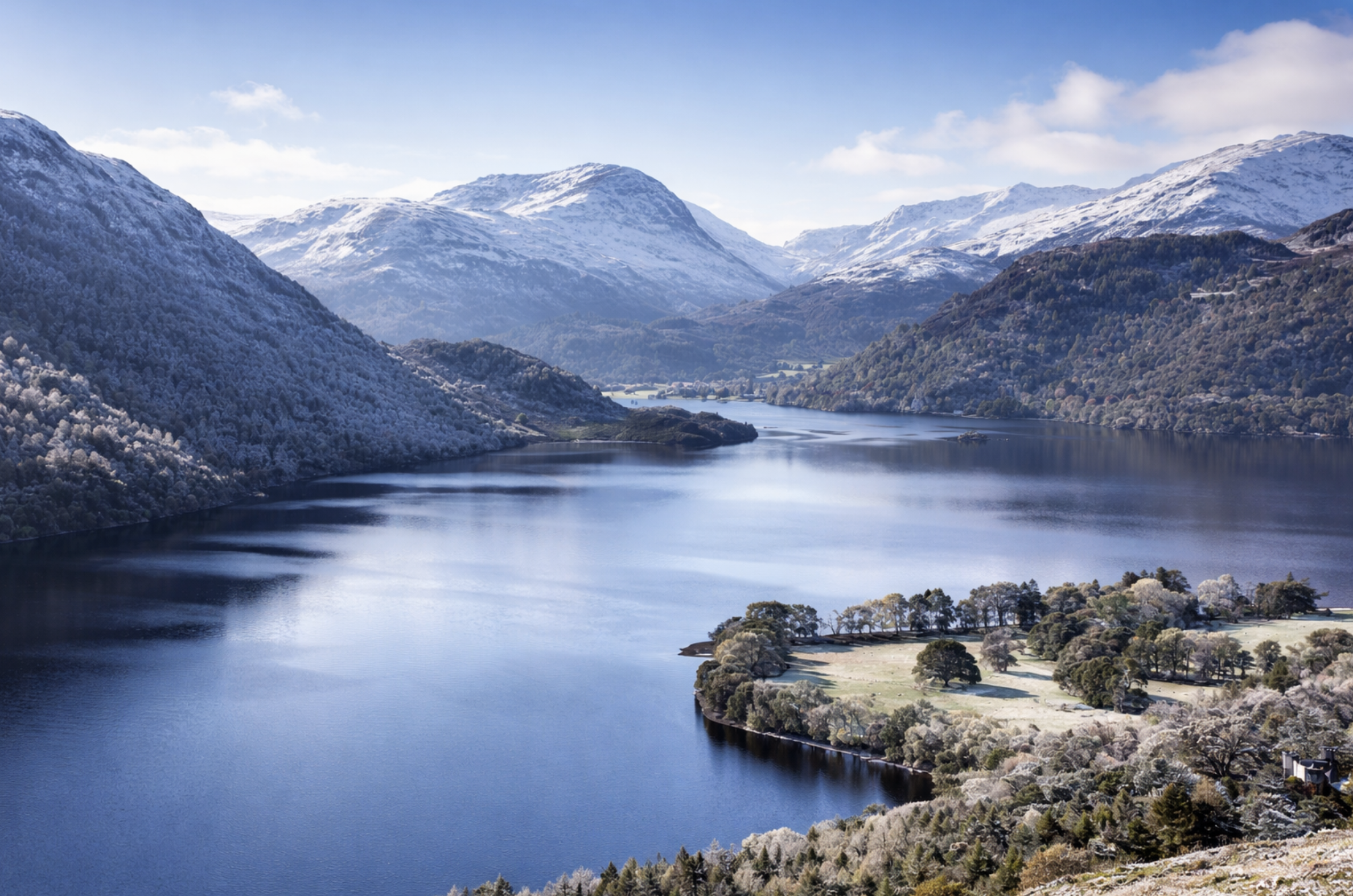
Bowness-on-Windermere sits on one of England’s most famous lakes, a shoreline settlement that grew from a small fishing and farming hamlet into the Lake District’s best known resort. The bay, the boat landings, and the steady flow of visitors tell a story that runs from medieval parish life, to steam power, to today’s year-round tourism.
Name and early beginnings
The name Bowness likely comes from Old Norse, with ness meaning headland, a nod to the rounded point that shelters Bowness Bay. People lived and worked around Windermere long before Bowness appears in records, with Roman activity at nearby Ambleside and farming communities in the fells. Bowness itself grew around a lakeside landing and a parish church that served a scattered rural population.
Medieval parish life
St Martin’s Church anchors Bowness’s medieval story. A church stood here by the late Middle Ages, with later rebuilding and Victorian restoration shaping the building you see today. The parish covered farms and shoreline dwellings, with fishing, woodland work, and smallholdings supporting local families. The lake was a highway as much as a view, boats carried people and goods along the shore when roads were rough.
Ferries, trading, and shoreline work
A ferry crossing near today’s Ferry Nab has operated for centuries, connecting the eastern shore with Claife and the west. Timber, farm produce, and slate moved by water because it was faster and safer than hauling by cart. Boatyards, fish curing, and small quays dotted the bay. Bowness remained modest in size, but its position made it a natural service point for farms and lakeside homes.
The railway arrives, 1847
Everything changed in 1847 when the Kendal and Windermere Railway reached Windermere town, a short walk or ride uphill from Bowness. Trains brought visitors in their thousands. Hotels, boarding houses, and tearooms appeared. Paths to viewpoints like Brant Fell and Orrest Head were improved, guides were printed, and Bowness shifted from working shoreline to destination in its own right.
Steamers and the golden age of the lake
The late 19th and early 20th centuries were the golden age of lake travel. Large passenger vessels linked Bowness with Ambleside and Lakeside. Historic boats still cruise today, a living thread to that era, including Tern from the 1890s and elegant 1930s sisters. On busy summer days, Bowness Pier became a theatre, whistles sounding, crowds gathering, guides selling tours, photographers offering souvenir portraits by the landings.
Yacht clubs, boating, and leisure
As leisure time expanded, sailing and rowing flourished. The bay hosted regattas, and local boatyards built elegant launches for hotels and private owners. Bowness settled into a new role, a place to stroll the Glebe, hire a boat, take tea, and watch the lake traffic come and go.
Arts and Crafts on the shore
At the turn of the century, the eastern shore became a showcase for design. Blackwell, an Arts and Crafts house by M H Baillie Scott, rose above the water with crafted wood, leaded glass, and views framed like paintings. It reflected a fashion for healthy air, lake views, and craftsmanship that drew creative visitors to Windermere’s shores.
War, industry, and resilience
The wider Windermere area played a striking role in the 20th century. Wartime aircraft building at White Cross Bay and the post-war settlement of young Holocaust survivors at Calgarth formed a powerful local chapter, connected to the lake communities that included Bowness. Tourism dipped in conflict years, then returned strongly, with motor cars, improved roads, and new guest houses reshaping the visitor pattern.
National Park and conservation, 1951 onward
The Lake District National Park was established in 1951, placing Bowness within protected landscapes. Shoreline access, footpaths, and heritage buildings gained new attention. Planning balanced visitor demand with conservation aims. The car ferry kept the cross-lake link alive, the pier remained the village’s open-air hall, and Bowness’s economy aligned firmly with hospitality, boating, and cultural attractions.
Bowness today
Modern Bowness is both busy and beautiful. Cruises still set the day’s rhythm, cafés spill onto pavements in summer, and the bay fills with sail, paddle, and the swan’s slow curve. The village mixes heritage and convenience, from the Royalty Cinema to galleries, from the churchyard’s quiet to the lively landings. The history remains visible, in the curve of the bay, the line of the pier, and the walking routes that have carried feet for generations.